The River Between
Novels
The River Between
Ngũgĩ wa Thiong'o · Good
KSh 450
In the shopa Kenyan company with a bookshop & a big idea
Books can take a child somewhere they've never been, introduce an idea they've never encountered, or make a possibility feel real. E-Maji-N8tion exists to make books and reading easier to reach, starting with affordable books and building toward more reading spaces for children across Kenya.

The bookshop
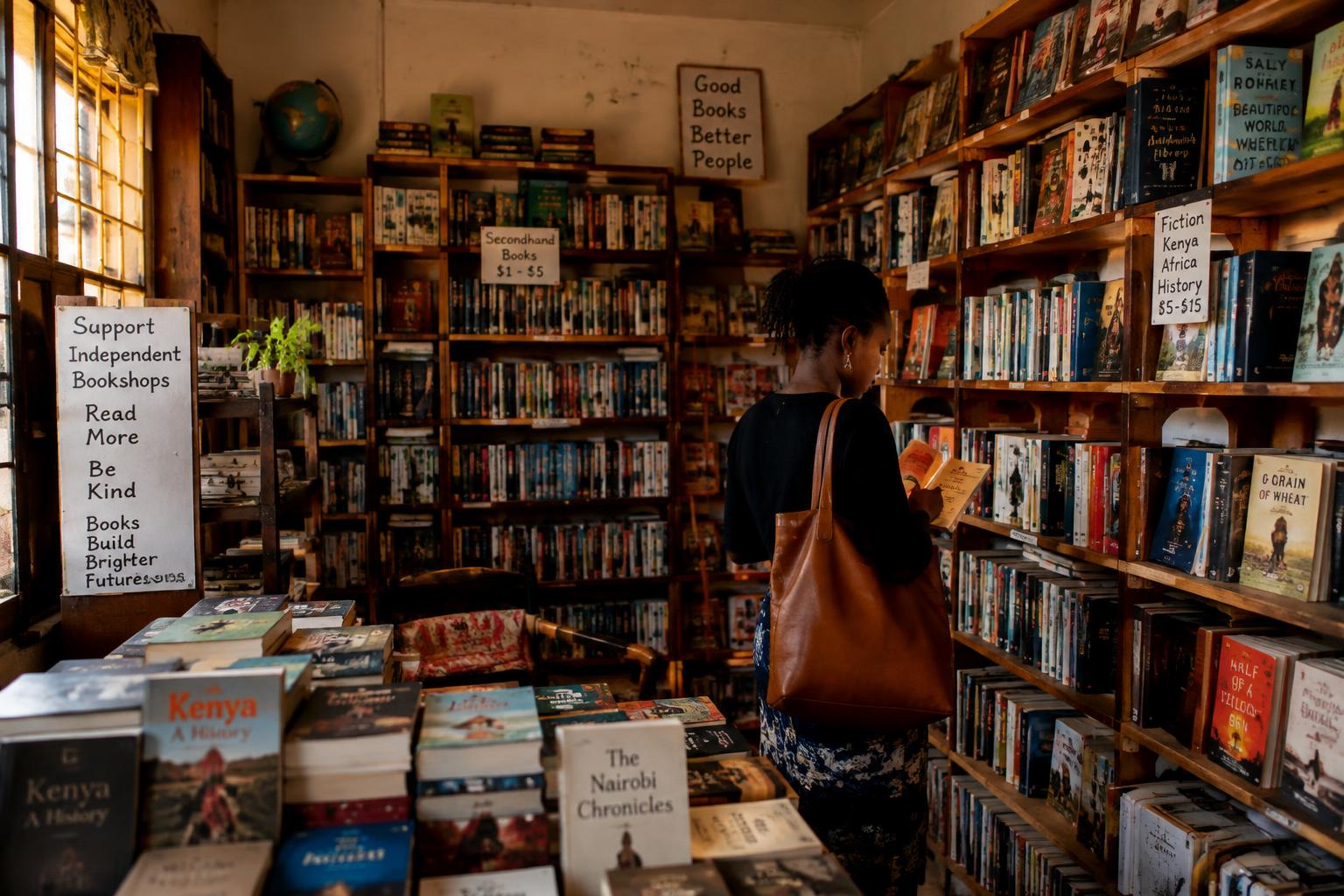
We source affordable books, new and well-loved, and put them on shelves in our shop near Egerton University. Online ordering is on its way; for now, reserve and collect. The majority of what we stock retail for between Ksh200 and Ksh400. Very hard to find such rates anywhere in Kenya.
The River Between
Novels
Ngũgĩ wa Thiong'o · Good
KSh 450
In the shopThings Fall Apart
Novels
Chinua Achebe · Very good
KSh 500
In the shopThe Day the Crayons Quit
Children's Books
Drew Daywalt · Very good
KSh 600
In the shopCharlotte's Web
Children's Books
E. B. White · Good
KSh 350
Gone for now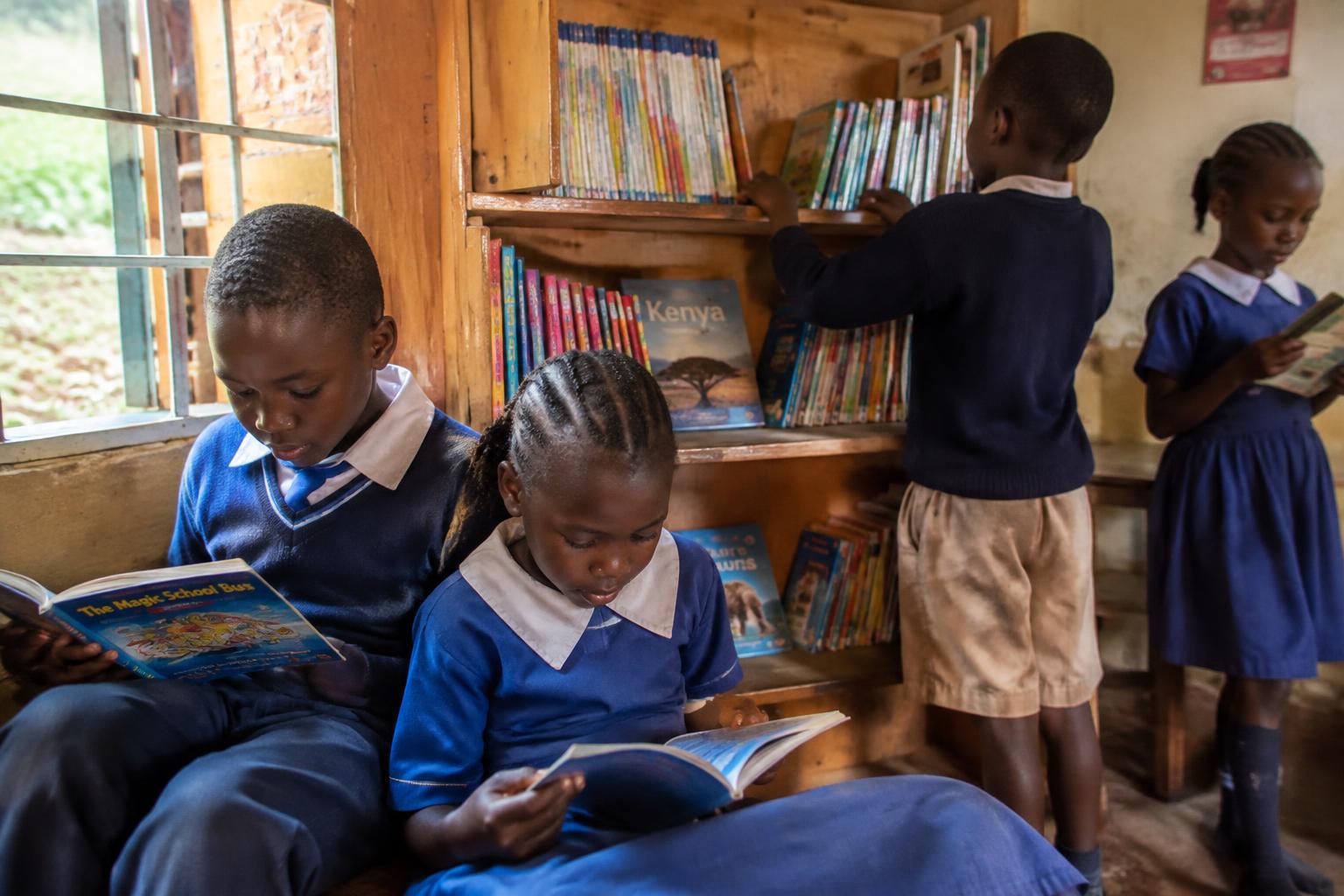
Books → ideas → worlds
We're starting with a bookshop because getting a book into someone's hands is the most practical place to begin. But the bigger question is what happens when more children have books within reach, so we're working on helping schools create reading spaces using the rooms, corners and walls they already have.
The what if behind E-Maji-N8tion
It's also about access.
The case for books isn't just emotional. Research from several countries has repeatedly linked access to books and reading with educational and developmental outcomes.
90% vs 30%
Across an international study of more than 160,000 adults in 31 countries, people who grew up in homes with large book collections (roughly 80–350 books) were substantially more likely to attain higher levels of education. A commonly cited comparison: around 90% completed ninth grade with 80+ books at home, versus around 30% with none.
Sikora, Evans & Kelley (2019), Social Science Research.
23.1% vs 7.0%
Children who owned a book were more than three times as likely to read daily as children who didn't: 23.1% compared with 7.0%.
National Literacy Trust research with children in England.
290,000
Children who are read to regularly may hear roughly 290,000 more words by age five than children who aren't regularly read to.
Logan et al. (2019), Ohio State University.
Access matters.
So what are we going to do about it?
60%
Our 2035 ambition
By 2035, E-Maji-N8tion aims to help make meaningful access to a library or equivalent reading resource available to at least 60% of Kenyan students, way up from the current 2%.
By "meaningful access" we mean a child can regularly reach, choose and borrow books appropriate to their age at school or nearby. We're beginning by testing practical, low-cost ways of putting books into existing school spaces.
The reading space model
Sometimes it's a room. Sometimes it's a classroom corner. Sometimes it's a shelf in a staffroom. Sometimes it's simply a collection of books that teachers can circulate between classrooms.
A suitable nook or space it already has.
Books, shelving, organisation and setup.
How the collection circulates among students.
"The shelf isn't the library. The access is."
The 1,000-book reading nook
~KSh 300,000 (USD$3000)
The approximate cost of creating one defined reading resource. Exact cost varies with school requirements and location. The school provides the space. This is our first model and it will evolve as we learn.
How it works
Choose a school you want to support. The school then provides a suitable space.
We work out what the school can accommodate.
We build a collection that suits the students and how it'll be used.
Shelving, organisation, labelling and delivery.
The school manages circulation and gets books into students' hands.
We'll learn from every school we work with and improve the model over time.
Journal
School Libraries
They don't — not all at once. But a school does, and here's the arithmetic.
School Libraries
A room is nice. Access is the point.
Books & Reading
Simple rotation, a notebook, and a little ceremony.
Visit the shop
Our bookshop near Egerton University in Nakuru County is where it all starts: shelves of affordable novels, children's books, revision guides and odd finds. Every shelf starts somewhere.
The founders
E-Maji-N8tion is run by a couple: one in charge of procurement and logistics, the other in marketing, research, writing and publishing. Between them, books get found, moved, shelved, and talked about.